
Choosing your first singing bowl can feel surprisingly complicated.
Should you start with one bowl or a set of seven? Does a particular note matter? What if you want to meditate with it, but also enjoy playing it for relaxation?
After 12 years of helping people find singing bowls and explore what they can do with sound, I've learnt that a useful starting point is much simpler than you might think.
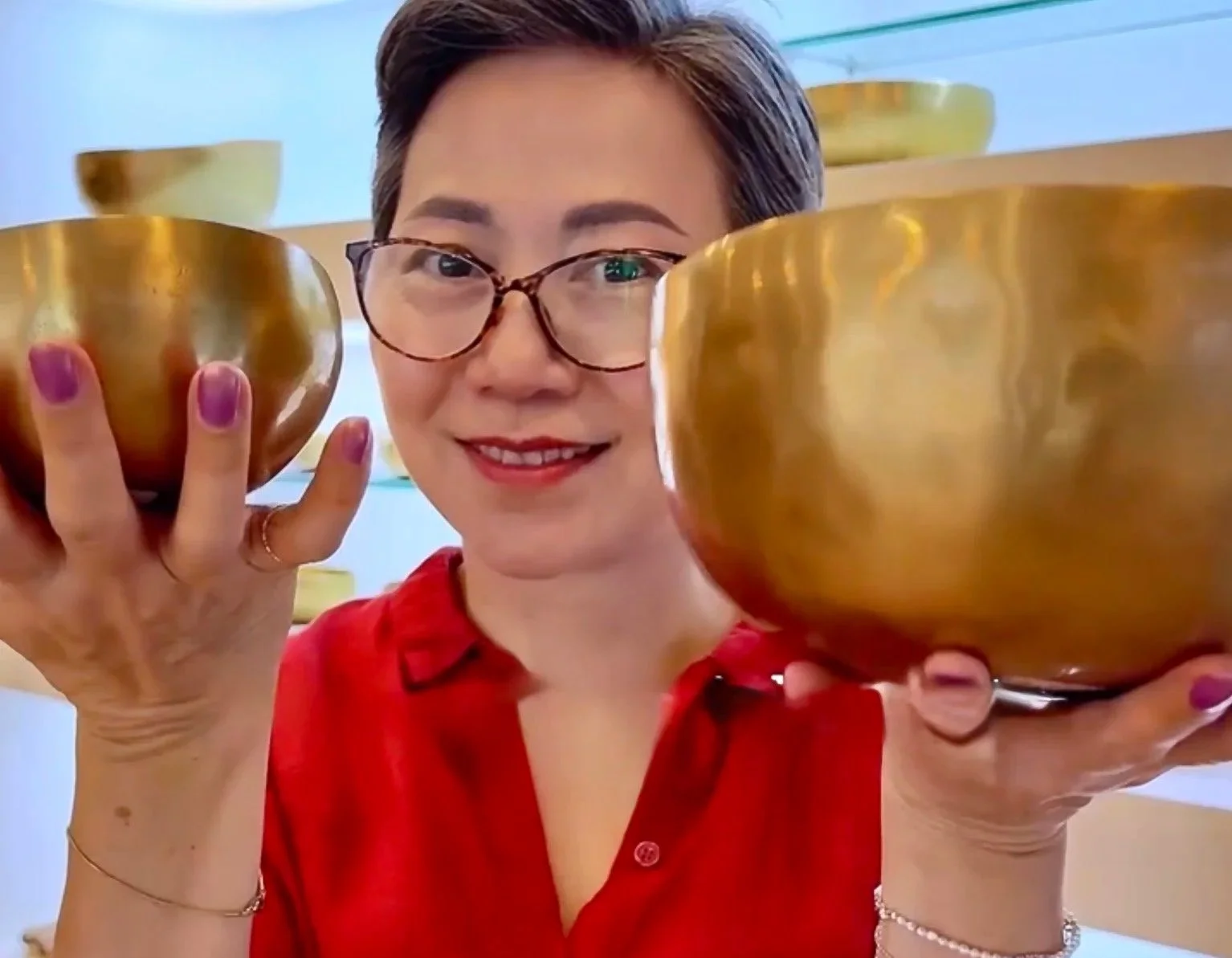
My Practical Framework for choosing 1 bowl, 2 bowls, 3 bowls or more.
Start with your purpose.
You don't need to know everything about singing bowls before choosing one. But having a clearer idea of what you want from it can make the process much easier.
Here is my practical framework for choosing one bowl, two bowls, three bowls or more.
1. Choosing One Singing Bowl: Start with Your Purpose
If you're buying your first singing bowl, begin by asking yourself a simple question:
What would I like this bowl to bring into my life?
Perhaps you have a busy mind and are looking for a deep, sustaining sound to help you slow down and settle.
Or perhaps you'd prefer a brighter, more uplifting sound that brings focus and clarity.
You might want a bowl for your morning routine, a few quiet moments between meetings, meditation or a personal mindfulness practice.
There is no single sound that everyone needs. What feels soothing to one person may feel too heavy to another. A sound that helps you feel alert might be exactly what someone else finds distracting.
This is why I encourage people to listen and explore their preferences rather than choosing solely by appearance, note or associations.
Your first bowl doesn't need to do everything. It needs to be a meaningful starting point for you.
2. Choosing Two Singing Bowls: Explore Contrast
Once you have one bowl, a second can introduce a different experience.
You might choose one with a deep, grounding sound and another with a brighter, more energising quality. One may appeal to you when you want to slow down, while the other may suit moments when you want to feel more awake and engaged.
Think of it as having different sound options for different moods and intentions.
Two bowls can also offer variety when several family members share them. Each person may need a different tuning.
3. Choosing a Third Singing Bowl: Find the Connection
With three bowls, you can begin exploring how individual sounds relate to one another.
If your first two bowls have contrasting qualities, the third might introduce a sound that sits comfortably between them. It could help bring the combination together, creating a more connected listening experience.
Rather than evaluating each bowl in isolation, listen to the three together.
Does the third bowl sound comfortable the other two?
Does it add something useful?
This is where choosing singing bowls becomes more than collecting individual instruments. You're beginning to explore the possibilities created by their relationships.
A bridging sound makes perfect sense when you have 2 contrasting sounds. If you already have 2 similar sounds, consider introducing contrast with this 3rd bowl.
4. Choosing Four Singing Bowls or More: Build Your Sound Profile
As your collection grows, it becomes increasingly useful to consider the overall sound profile rather than choosing each bowl independently.
Depth: Do you prefer deep, steady sounds, lighter tones, or a mixture?
Contrast: Do the bowls offer different experiences, or do they sound too similar for your intended use?
Cohesion: When played together, do the sounds complement one another?
Expression: What kind of feelings do the sounds inspire in you?
You might want a small collection for personal meditation. Or you may be exploring a richer meditative soundscape.
The aim is to build a meaningful collection that aligns with your purpose, reflects your preferences and sounds cohesive.
And remember, more bowls don't automatically mean a better experience. A thoughtfully chosen collection of three bowls may serve you better than seven bowls selected without a clear purpose. The point is to make informed choices rather than assuming you need a particular number of bowls before you can begin.
Here's the idea in a nutshell:
One bowl is a choice. Two create contrast. Three connect. Four or more? Now you're composing.